

The views expressed in this article are those of the authors and do not necessarily reflect the views of the University of Piraeus and the Bank of Greece.
Abstract
This Policy Note provides a non-technical summary of the paper “Can higher education levels improve tax compliance?” and examines whether education can help reduce the VAT gap in the European Union. Our results show that higher education levels are associated with smaller VAT gaps, suggesting that education strengthens tax morale, civic norms, and engagement with the formal economy. Strong institutions reinforce these effects, while corruption undermines compliance. The findings highlight that education should be viewed not only as a social or growth policy, but also as a long-term fiscal investment supporting sustainable revenue collection in Europe.
This SUERF Policy Note is based on our recent work, “Can Higher Education Levels Improve Tax Compliance?” (Gazilas & Bragoudakis, 2026) and translates its main empirical findings into a policy-oriented discussion on VAT compliance in the European Union. Drawing on a comprehensive panel analysis of 25 EU Member States over the period 2008–2022, the note highlights the roles of education, institutional quality, and macroeconomic conditions in shaping VAT performance. By emphasizing policy relevance over technical detail, the note aims to contribute to current debates on fiscal sustainability and tax governance in Europe, offering evidence-based insights for policymakers seeking to strengthen revenue collection and reduce tax non-compliance.
Value-added tax (VAT) constitutes one of the most important revenue sources for European governments and represents a central pillar of fiscal policy within the European Union. Owing to its broad base and relative neutrality, VAT has long been regarded as an efficient instrument for financing public expenditure and supporting economic integration across Member States (Keen, 2013; Barbone et al., 2013). Despite extensive harmonization and continuous administrative reforms, however, VAT revenue losses remain substantial. The VAT gap, the difference between theoretically collectible VAT and actual revenues, continues to pose a significant challenge for fiscal sustainability, fairness, and trust in public institutions (Reckon, 2009; CASE, 2019; European Commission, 2022).
Persistent VAT gaps undermine governments’ ability to finance public goods and weaken the perceived equity of tax systems. When compliance is uneven, compliant taxpayers bear a disproportionate burden, while non-compliance erodes confidence in state institutions and reinforces informal economic activity (Keen & Smith, 2006; Murphy, 2012). These concerns have become particularly salient in the aftermath of major economic shocks, including the global financial crisis and the COVID-19 pandemic, which have intensified fiscal pressures and exposed structural weaknesses in revenue collection across Europe (European Commission, 2020, 2023).
Policy responses to VAT non-compliance have traditionally focused on enforcement capacity, administrative simplification, and technological innovation. Digital reporting systems, electronic invoicing, and enhanced audit tools have contributed to measurable reductions in VAT losses in several Member States (European Commission, 2023). While these measures are necessary, large cross-country differences in VAT performance persist even among countries with comparable administrative frameworks. This suggests that VAT compliance is influenced not only by enforcement and technology but also by deeper structural and societal factors.
One such factor is education. A large body of economic literature has established education as a key determinant of productivity, growth, and institutional quality (Becker, 1994; Hanushek & Woessmann, 2008, 2012). Education has also been shown to foster civic engagement, political participation, and trust in public institutions, all of which are closely linked to compliance behavior (Dee, 2004; Campbell, 2006; OECD, 2018). From a behavioral perspective, higher educational attainment is associated with greater understanding of legal obligations, stronger tax morale, and increased willingness to contribute to public goods (Lewis, 1982; Alm & Torgler, 2006; Kirchler et al., 2008).
Despite these well-established links, education has received limited attention in the empirical literature on VAT compliance. Existing studies on VAT gaps predominantly emphasize macroeconomic conditions, governance quality, corruption, and administrative efficiency, often treating education as a secondary or residual factor (Keen & Lockwood, 2010; Reckon, 2009; Barbone et al., 2013). When education is included, it is typically captured through aggregate or static indicators that fail to reflect differences across educational levels or changes over time. As a result, the role of education as a structural driver of tax compliance remains underexplored, particularly in a European context characterized by diverse education systems and institutional environments.
This Policy Note addresses this gap by examining whether higher education levels are associated with improved VAT compliance across EU Member States. Using data for 25 countries over the period 2008–2022, it explores how enrollment in primary, secondary, and tertiary education relates to the VAT gap, while accounting for governance quality, corruption, and macroeconomic conditions. By focusing on within-country developments over time, the analysis isolates structural relationships rather than short-term fluctuations driven by cyclical factors.
The relationship between education and VAT compliance is examined using data from 25 Member States of the European Union over the period 2008–2022. VAT compliance is measured through the VAT gap, a widely used indicator that captures the difference between potential VAT revenues under full compliance and actual collections (Reckon, 2009; European Commission, 2022). This measure reflects losses arising from evasion, fraud, insolvencies, and administrative inefficiencies and is commonly employed in both academic research and policy analysis (Keen & Smith, 2006; CASE, 2019).
Education is captured through enrollment at the primary, secondary, and tertiary levels, allowing for a differentiated assessment of how education at various stages of the life cycle relates to tax compliance. This distinction is important, as previous studies often rely on aggregated or static indicators of human capital that obscure meaningful variation across educational levels and over time (Barbone et al., 2013; Hanushek & Woessmann, 2012). By contrast, enrollment-based measures better reflect changes in access to education and participation rates, which are particularly relevant in a European context marked by heterogeneous education systems and demographic trends.
In addition to education, the analysis explicitly accounts for the institutional environment in which VAT systems operate. Governance quality is captured through indicators of regulatory quality and control of corruption, which reflect the effectiveness, transparency, and credibility of public institutions. These dimensions are central to understanding compliance behavior, as they shape both the incentives to comply and the perceived fairness of the tax system. By jointly considering education and governance, the empirical framework allows for a more comprehensive assessment of the structural factors underpinning VAT compliance across EU Member States, distinguishing the role of human capital formation from broader institutional constraints and administrative capacity.
Figure 1. VAT Gap Per Capita (in Billion EUR) 2008
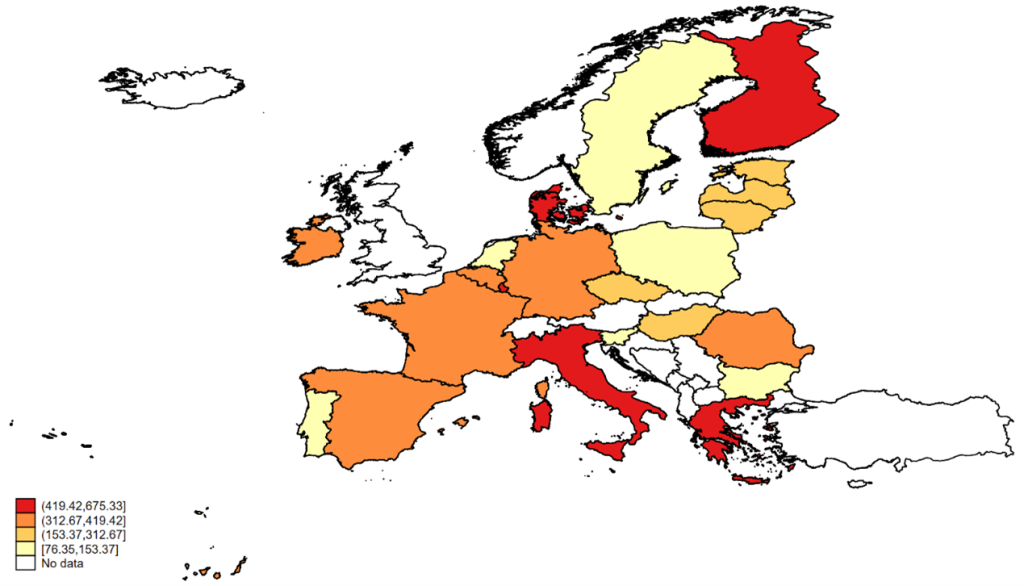
Note: The map was generated by authors using the spmap command in Stata, which facilitates the spatial depiction of cross-national economic indicators. The shapefile used to construct this map was retrieved from Sevdari, Kristian; Marmullaku, Drin (2023). Shapefile of European countries. Technical University of Denmark. Dataset. https://doi.org/10.11583/DTU.23686383.v1 https://doi.org/10.11583/DTU.23686383.v1
The empirical evidence points to a consistent and robust association between higher education levels and improved VAT compliance. Increases in enrollment at primary, secondary, and tertiary education levels are all associated with reductions in the VAT gap. This finding suggests that education influences compliance behavior through multiple channels. At early stages, education contributes to the formation of civic norms, social responsibility, and basic institutional understanding, which are known to shape long-term compliance attitudes (Lewis, 1982; Dee, 2004; Campbell, 2006). At higher levels, education enhances cognitive skills and legal awareness, improving individuals’ ability to navigate complex tax systems and reducing both intentional and unintentional non-compliance (Becker, 1994; Hanushek & Woessmann, 2008).
The results also highlight the importance of institutional quality. Regulatory quality is positively associated with VAT compliance, while higher perceived corruption is linked to larger VAT gaps. These findings are consistent with a large body of literature showing that weak institutions and corruption undermine tax morale and encourage informal economic activity (Friedman et al., 2000; Mauro, 1998; Rose-Ackerman, 1999). When taxpayers perceive tax systems as arbitrary, unfair, or captured by private interests, voluntary compliance deteriorates, even in the presence of formal enforcement mechanisms (Alm & Torgler, 2006; Torgler & Schneider, 2009).
Figure 2. VAT Gap Per Capita (in Billion EUR) 2015
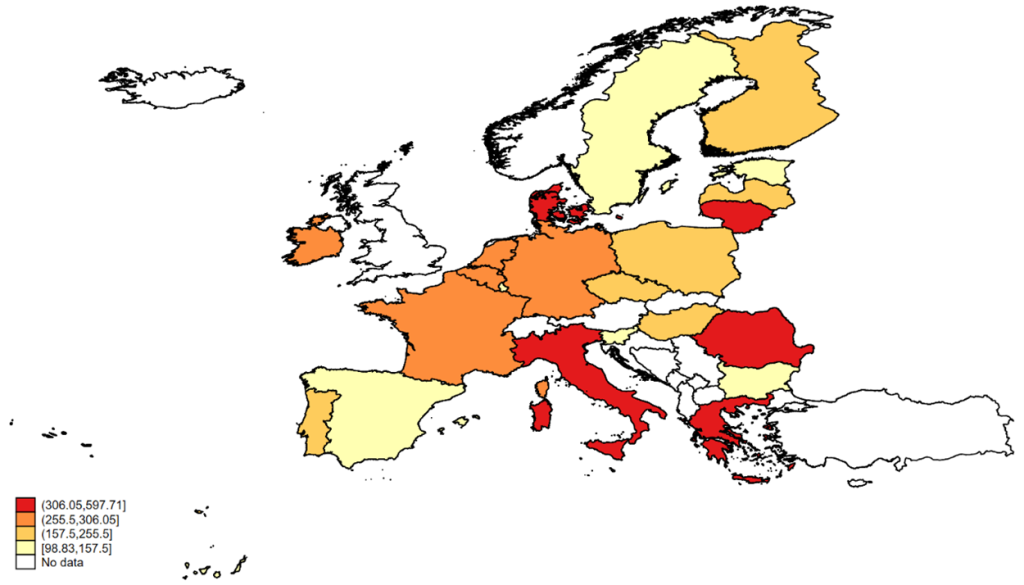
Note: The map was generated by authors using the spmap command in Stata, which facilitates the spatial depiction of cross-national economic indicators. The shapefile used to construct this map was retrieved from Sevdari, Kristian; Marmullaku, Drin (2023). Shapefile of European countries. Technical University of Denmark. Dataset. https://doi.org/10.11583/DTU.23686383.v1
Importantly, the effect of education on VAT compliance remains significant even after controlling for governance quality and corruption. This suggests that education and institutions operate through related but distinct mechanisms. While governance reforms improve enforcement credibility and administrative efficiency, education strengthens intrinsic motivation to comply by shaping beliefs about fairness, legitimacy, and collective responsibility (Kirchler et al., 2008; Luttmer & Singhal, 2014). In this sense, education acts as a structural driver of compliance rather than a simple proxy for institutional quality.
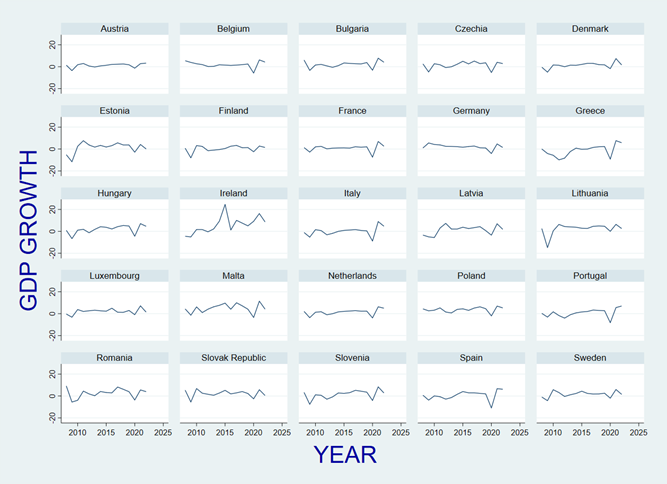
Macroeconomic conditions also play a role. Higher economic growth is associated with lower VAT gaps, reflecting stronger tax bases and reduced incentives for evasion during periods of economic expansion. Conversely, economic downturns tend to coincide with widening VAT gaps, as firms and households face liquidity constraints and increased uncertainty (Keen & Lockwood, 2010; Slemrod, 2007). However, the influence of economic growth is less persistent than that of education and governance, underscoring the importance of structural factors over purely cyclical dynamics.
Taken together, the evidence indicates that VAT compliance is deeply embedded in broader social and institutional environments. Administrative reforms and technological innovations are necessary but insufficient to fully address VAT losses. Education emerges as a long-term determinant of compliance, complementing governance quality and reinforcing the effectiveness of enforcement measures. These findings suggest that policies aimed at improving VAT performance should extend beyond tax administration and incorporate broader investments in human capital and institutional trust.
Figure 3. VAT Gap Per Capita (in Billion EUR) 2022
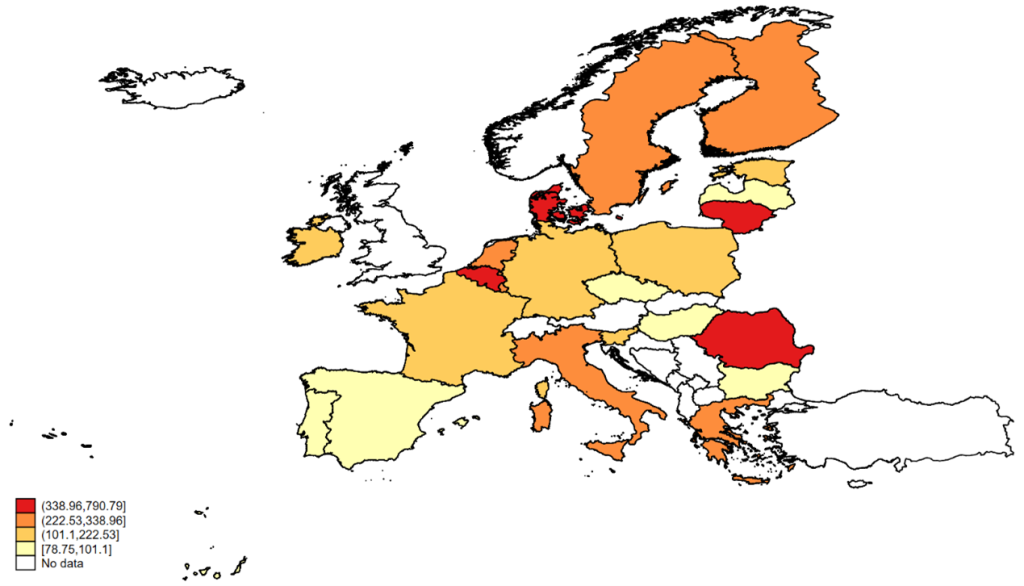
Note: The map was generated by authors using the spmap command in Stata, which facilitates the spatial depiction of cross-national economic indicators. The shapefile used to construct this map was retrieved from Sevdari, Kristian; Marmullaku, Drin (2023). Shapefile of European countries. Technical University of Denmark. Dataset. https://doi.org/10.11583/DTU.23686383.v1
The findings of this Policy Note have important implications for fiscal policy in the European Union. They suggest that VAT compliance should not be viewed solely as the outcome of enforcement capacity, administrative efficiency, or technological sophistication. Instead, compliance is also shaped by deeper social and institutional factors, with education playing a central role. By influencing civic norms, institutional trust, and engagement with the formal economy, education contributes to the sustainability of tax systems and the effectiveness of revenue collection (Becker, 1994; OECD, 2018; Luttmer & Singhal, 2014).
Education policy should therefore be recognized as an integral component of fiscal capacity. Investments in primary and secondary education appear particularly important, as they shape long-term attitudes toward public institutions and collective responsibility at early stages of life (Dee, 2004; Campbell, 2006). These formative effects are likely to persist over time, reinforcing voluntary compliance well before individuals enter the tax system as workers, consumers, or entrepreneurs. Tertiary education further strengthens compliance by enhancing legal literacy, analytical skills, and understanding of complex tax systems, thereby reducing both intentional evasion and inadvertent non-compliance (Hanushek & Woessmann, 2008; Slemrod, 2007). From a policy perspective, cuts to education spending may thus carry hidden fiscal costs by weakening the social foundations of compliance.
Figure 4. VAT Gap Per Capita (in Billion EUR) In All Countries
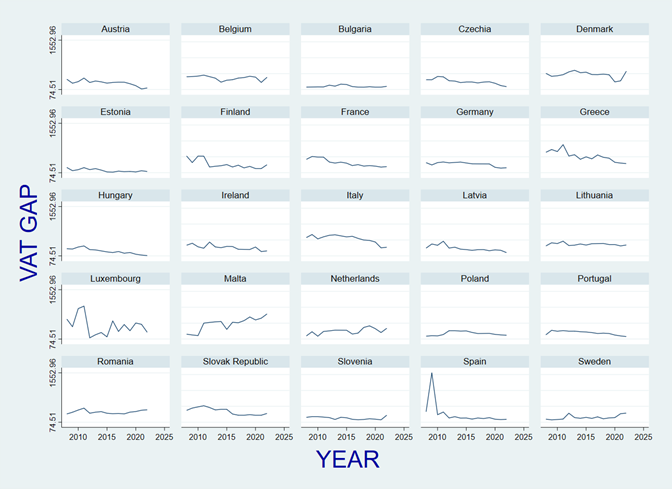
Source: Authors’ Calculations
The results also underline the complementary relationship between education and institutional quality. Strong regulatory frameworks and effective control of corruption are consistently associated with lower VAT gaps, confirming earlier findings that institutional weakness undermines tax morale and encourages informal activity (Mauro, 1998; Friedman et al., 2000; Rose-Ackerman, 1999). However, the persistence of the education effect after controlling for governance indicators suggests that institutional reforms alone are insufficient. Education strengthens the legitimacy of institutions by improving citizens’ understanding of how tax revenues are used and by reinforcing expectations of fairness and accountability, which are essential for voluntary compliance (Alm & Torgler, 2006; Kirchler et al., 2008; Torgler & Schneider, 2009).
Recent policy initiatives have rightly emphasized digitalization as a tool for improving VAT compliance. Electronic invoicing, real-time reporting, and enhanced audit technologies have contributed to narrowing VAT gaps in several Member States (European Commission, 2023). While these measures are effective, the evidence presented here suggests that their long-term success depends on broader social acceptance and trust. Technological solutions reduce opportunities for evasion, but education shapes the willingness to comply. Without sufficient tax morale and institutional trust, enforcement-driven approaches risk generating resistance or displacement toward more sophisticated forms of avoidance (Keen & Smith, 2006; Barbone et al., 2013).
Figure 5. GDP Growth (Annual %) In All Countries
Source: Authors’ Calculations
Macroeconomic conditions further interact with these structural factors. Periods of strong economic growth are associated with improved VAT compliance, while downturns tend to exacerbate evasion pressures (Keen & Lockwood, 2010; Slemrod, 2007). This cyclical dimension highlights the importance of safeguarding compliance during economic stress, particularly through policies that support households and firms without weakening incentives to remain in the formal economy. Structural investments in education and governance help ensure that compliance recovers more rapidly once economic conditions stabilize, reducing the persistence of VAT losses over time (European Commission, 2020; 2022).
At the European level, these findings support a more integrated approach to fiscal policy coordination. Efforts to reduce VAT losses should be linked to broader EU objectives in education, institutional quality, and social cohesion. Education policies supported through EU funding mechanisms can generate spillover benefits by strengthening tax compliance and reducing cross-country disparities in fiscal performance. In this sense, education contributes not only to growth and convergence but also to the resilience and fairness of public finances across the Union (OECD, 2018; Keen, 2013).
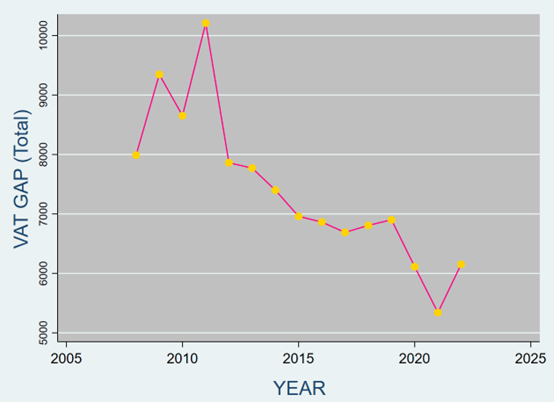
Figure 6. Total VAT Gap (per Year)
Source: Authors’ Calculations
Reducing the VAT gap ultimately requires moving beyond a narrow focus on enforcement and administrative capacity alone. Lasting improvements in tax compliance are more likely to arise in societies where citizens understand the role of taxation in financing public goods, trust public institutions, and perceive the tax system as transparent and fair. Education plays a central role in shaping these conditions by fostering civic awareness, social responsibility, and long-term tax morale. When combined with effective governance reforms and macroeconomic stability, treating education as a strategic fiscal investment offers a more comprehensive and durable pathway for strengthening VAT compliance and public finances in Europe.
SUERF_References” – Alm, J., & Torgler, B. (2006). Culture differences and tax morale in the United States and Europe. Journal of Economic Psychology, 27(2), 224–246. https://doi.org/10.1016/j.joep.2005.09.002
Barbone, L., Bird, R. M., & Vazquez Caro, J. (2013). The Costs of VAT: A Review of the Literature. CASE Network Reports, (106). CASE – Center for Social and Economic Research. https://icepp.gsu.edu/files/2015/03/ispwp1222.pdf
Becker, G. S. (1994). Human capital: A theoretical and empirical analysis with special reference to education (3rd ed.). University of Chicago Press. https://press.uchicago.edu/ucp/books/book/chicago/H/bo3684031.html
Campbell, D. E. (2006). What is education’s impact on civic and social engagement? In Measuring the effects of education on health and civic engagement: Proceedings of the Copenhagen Symposium (pp. 25–126). OECD Publishing.
CASE. (2019). Study and Reports on the VAT Gap in the EU-28 Member States. CASE Network Reports. Center for Social and Economic Research. https://case-research.eu/app/uploads/2024/06/id_plik6251.pdf
Dee, T. S. (2004). Are there civic returns to education? Journal of Public Economics, 88(9–10), 1697–1720. https://doi.org/10.1016/j.jpubeco.2003.11.002
European Commission. (2020). VAT Gap: EU countries lost €140 billion in VAT revenues in 2018. European Commission Press Release.
European Commission. (2022). VAT Gap Report 2022. European Commission.
European Commission. (2023). VAT Gap Report 2023. European Commission.
Friedman, E., Johnson, S., Kaufmann, D., & Zoido-Lobaton, P. (2000). Dodging the grabbing hand: The determinants of unofficial activity in 69 countries. Journal of Public Economics, 76(3), 459–493. https://doi.org/10.1016/S0047-2727(99)00093-6
Gazilas, E. T., & Bragoudakis, Z. (2026). Can higher education levels improve tax compliance? Bank of Greece Working Paper No. 355, https://doi.org/10.52903/wp2026355
Hanushek, E. A., & Woessmann, L. (2008). The role of cognitive skills in economic development. Journal of Economic Literature, 46(3), 607–668. https://www.aeaweb.org/articles.php?doi=10.1257/jel.46.3.607
Hanushek, E. A., & Woessmann, L. (2012). Do better schools lead to more growth? Cognitive skills, economic outcomes, and causation. Journal of Economic Growth, 17(4), 267–321. https://doi.org/10.1007/s10887-012-9081-x
Keen, M. (2013). The anatomy of the VAT. National Tax Journal, 66(2), 423–446. https://www.journals.uchicago.edu/doi/epdf/10.17310/ntj.2013.2.06
Keen, M., & Lockwood, B. (2010). The value-added tax: Its causes and consequences. Journal of Public Economics, 94(1–2), 138–151. https://doi.org/10.1016/j.jdeveco.2009.01.012
Keen, M., & Smith, S. (2006). VAT fraud and evasion: What do we know, and what can be done? National Tax Journal, 59(4), 861–887. https://www.journals.uchicago.edu/doi/epdf/10.17310/ntj.2006.4.07
Kirchler, E., Hoelzl, E., & Wahl, I. (2008). Enforced versus voluntary tax compliance: The “slippery slope” framework. Journal of Economic Psychology, 29(2), 210–225. https://doi.org/10.1016/j.joep.2007.05.004
Lewis, A. (1982). The psychology of taxation. Martin Robertson.
Luttmer, E. F., & Singhal, M. (2014). Tax morale. Journal of Economic Perspectives, 28(4), 149–168. https://pubs.aeaweb.org/doi/pdfplus/10.1257/jep.28.4.149
Mauro, P. (1998). Corruption and the composition of government expenditure. Journal of Public Economics, 69(2), 263–279. https://doi.org/10.1016/S0047-2727(98)00025-5
Murphy, R. (2012). Closing the European Tax Gap. Tax Research LLP. https://www.socialistsanddemocrats.eu/sites/default/files/120229_richard_murphy_eu_tax_gap_en.pdf
OECD. (2018). Education at a Glance 2018: OECD Indicators. OECD Publishing. https://www.oecd.org/en/publications/2018/09/education-at-a-glance-2018_g1g921ab.html
Reckon. (2009). Study to Quantify and Analyze the VAT Gap in the EU-25 Member States. Reckon LLP, European Commission Report. https://op.europa.eu/en/publication-detail/-/publication/70e72b0e-27e3-11ec-bd8e-01aa75ed71a1
Rose-Ackerman, S. (1999). Corruption and government: Causes, consequences, and reform. Cambridge University Press.
Sevdari, Kristian; Marmullaku, Drin (2023). Shapefile of European countries. Technical University of Denmark. Dataset. https://doi.org/10.11583/DTU.23686383.v1
Slemrod, J. (2007). Cheating ourselves: The economics of tax evasion. Journal of Economic Perspectives, 21(1), 25–48. https://pubs.aeaweb.org/doi/pdfplus/10.1257/jep.21.1.25
Torgler, B., & Schneider, F. (2009). The impact of tax morale and institutional quality on the shadow economy. Journal of Economic Psychology, 30(2), 228–245. https://doi.org/10.1016/j.joep.2008.08.004