

We would like to thank Giovanni di Luozzo, Luca Parafioriti, Javier Arranz Barquero and Emre Nalli for excellent research assistance. The views expressed are those of the author(s) and do not necessarily reflect those of the European Central Bank or the Eurosystem.
Abstract
In the 2026 thematic stress test of the ECB Banking Supervision, the largest euro zone banks were asked to design geopolitical risk scenarios implying significant capital depletion and to identify effective mitigating management actions that are considered in the Internal Capital Adequacy Assessment Process (ICAAP). This policy note discusses the credibility of the banks’ proposed mitigating actions by examining historical bank behaviour during past systemic crises. Our findings show that particularly actions dependent on market conditions such as equity issuance or interest margin repricing become less effective and costlier when needed most. This underscores the need for banks to incorporate systemic aspects into their management actions to ensure that they remain credible and mutually consistent when many institutions act simultaneously during widespread geopolitical stress.
Recent years have seen a dramatic rise in geopolitical and geoeconomic tensions, at both European and global level (Chart 1). This has been exemplified by several military conflicts, including the wars in Ukraine and the Middle East, and associated disruptions to supply chains. Macroeconomic confidence effects have furthermore been compounded by trade tensions and increasing tariffs vis-à-vis the United States.
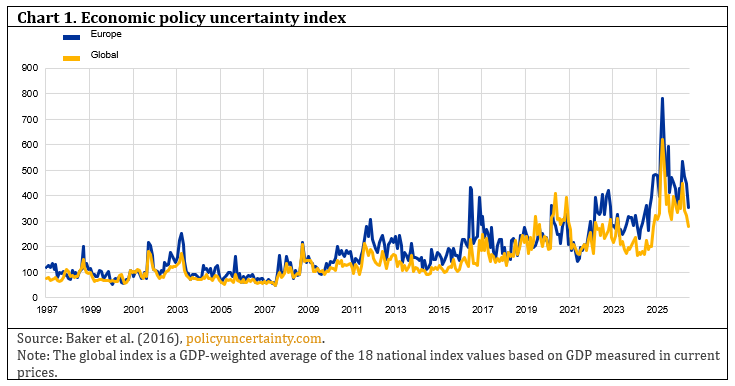
Geopolitical risk is not a new theme. But its recent intensification has urged both supervisors and macroprudential authorities to incorporate geopolitical risk considerations in their policy strategies. On the supervisory side, ECB Banking Supervision has included geopolitical risk as a critical part of its supervisory priorities (ECB, 2025b, and Buch, 2024). On the macroprudential side, the ECB and ESRB recently highlighted the importance of considering geopolitical risks and geoeconomic fragmentation in the context of financial stability assessments (ECB and ESRB, 2026).
Geopolitical risk is a cross-cutting risk driver which may materialise in many different ways and through multiple transmission channels (e.g., real economy, financial market, security and operational safety channels). It may affect banks’ traditional risk categories, including credit risk, market risk, profitability, operational risk, liquidity and funding and governance. It is therefore critical that banks develop a good understanding of how geopolitical events may affect them and, in case they materialise, implement well-thought-through plans to mitigate their effects.
Against this background, ECB Banking Supervision conducted its 2026 thematic stress test exercise focused on geopolitical risks. The purpose of the exercise was to raise banks’ awareness and preparedness regarding geopolitical risks.
Specifically, banks were asked to conduct reverse stress test simulations based on a geopolitical scenario of their choice with a CET1 depletion target of 300 basis points (or a more conservative target based on the banks’ approved internal warning limit, if deemed more suitable). In addition to the direct solvency impact, banks were asked to also simulate and explain what the scenario would imply for their liquidity and operational resilience.
Finally, banks were also asked to document and explain what type of mitigating management actions they were planning to undertake should the geopolitical stress scenario materialise, including a quantification of their expected effectiveness in addressing the resulting capital depletion. It is critical that banks, as part of their capital and recovery planning, have realistic and implementable plans in place to restore their capital, liquidity and operational resilience. This is even more important in the current context of heightened geopolitical and macroeconomic uncertainty.
In this policy note, we therefore focus on banks’ ability to carry out mitigating management actions in a situation of systemic geopolitical stress that affects the broad economic and financial system. The systemic aspect is critical because actions that may seem to be effective at individual bank level might not be so during a wide-spread crisis, where many banks will be “rushing to the exits” at more or less the same time.
The article is structured as follows: First, we describe the scenario narratives provided by the 110 banks participating in the ECB geopolitical reverse stress test. Second, we assess the realism of the mitigating management actions envisaged by banks should the geopolitical stress scenarios materialise.
The 2026 SSM thematic stress test was performed in the context of banks’ ICAAP reverse stress test framework. Banks were allowed to use their own reverse stress test methodologies that they apply to manage risk. This also implied that the nature of the exercise was less prescriptive than other ECB Banking Supervision stress tests.
The main motivation behind this choice was to urge banks to think broadly and with an open mind about the type of geopolitical events that would be most relevant from the perspective of the individual bank, in view of its own business model, exposure composition and risk profile.
In addition to the fact that the exercise was conducted as a reverse stress test with a pre-defined CET1 depletion target of at least 300 basis points, the main innovation was that each bank submitted its own specific scenario. As a result, ECB Banking Supervision collected 110 scenarios, one from each of the participating banks.
This multitude of scenarios provided supervisors with considerable insights into banks’ thinking about geopolitical risks and how they could evolve in ways that could have a significant impact on their solvency position. In this regard, the exercise may also provide relevant information for the scenario design for future EU-wide stress tests.
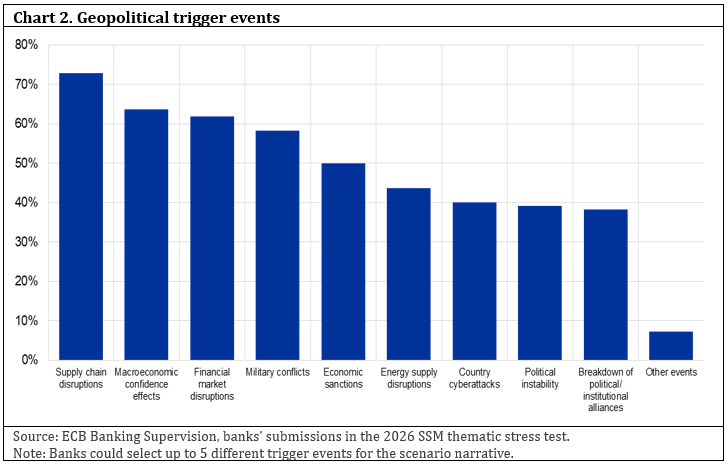
Banks could select up to five main trigger events underlying their scenario narrative. From the responses, depicted in Chart 2, it is notable that about 60-70% of the banks considered trigger events related to supply chain disruptions, macroeconomic and financial confidence effects and military conflicts. Also, economic sanctions, energy supply disruptions and cyberattacks appeared in many banks’ scenarios.
Narratives provided by banks reflect systemic scenarios that combine multiple risk events rather than isolated conflicts and disruptions. For example, the escalation of the Russia–Ukraine war emerged as one of the prevailing elements and was frequently combined with USA–China and China–Taiwan tensions. At the same time, only one-fourth of the banks mentioned an escalation of conflicts in the Middle East including the closure of the Strait of Hormuz.1 Banks translated these triggers into four broad scenario categories: recessionary or stagflation scenarios involving rising or falling interest rate paths.
The important requirement, however, when banks are designing their geopolitical scenarios is that they should ensure that the scenarios are relevant to their business model, risk profile and portfolio composition. In other words, banks were not required to design the most up-to-date and likely geopolitical stress scenario but rather a plausible scenario that they deemed most pertinent to their specific case.
Beyond the narratives of the specific scenarios themselves, the responses reflect significant variation in the severity of shocks across the banks’ scenarios. This dispersion reflects different sensitivities of the key risk drivers, such as credit risk, market risk or net interest income, to macro-financial variables, with some banks requiring relatively larger shocks to reach the CET1 depletion target (ECB, 2026).
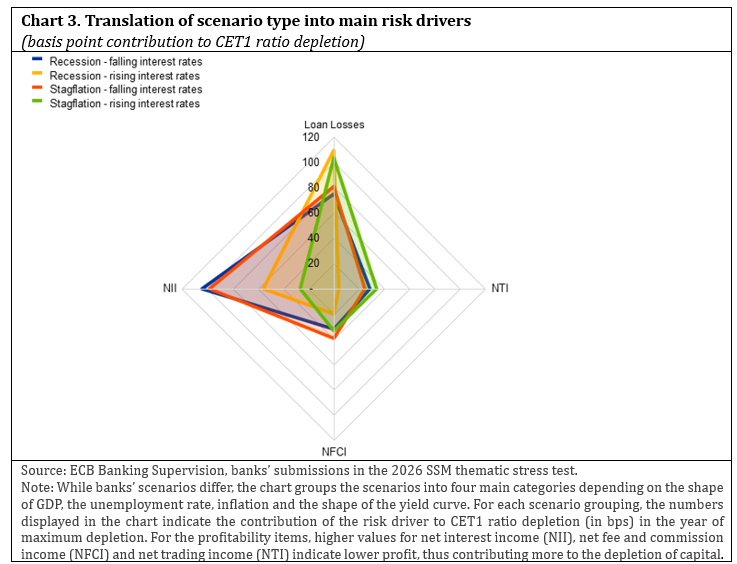
In terms of how those different shapes of scenarios affect the composition of risk drivers and subsequently bank CET1 ratios, a key distinguishing feature is the shape of the yield curve (Chart 3). Scenarios assuming an increase of interest rates generally tend to result in relatively higher loan losses but more resilient net interest income. The opposite is the case for scenarios assuming declining interest rates as they tend to lead to relatively larger reductions of net interest income.
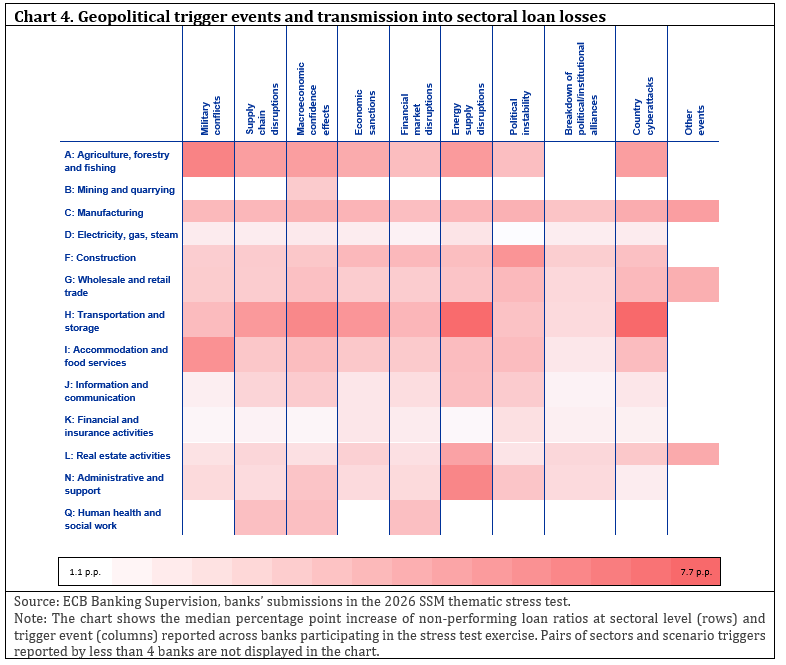
It is critical that banks ensure prudent monitoring of risks related to geopolitically vulnerable sectors and business lines. According to banks’ reverse stress test projections, the geopolitical stress scenarios lead to a deterioration of the credit risk indicators in sectors that are more vulnerable to trade, energy and supply chain disruptions, such as agriculture, construction, manufacturing, transport and accommodation and food services (Chart 4).
There are notable differences in geopolitical trigger events that drive credit deterioration in specific economic sectors (here measured by an increase in non-performing loan ratios). Transportation (H), Agriculture (A) and Manufacturing (C) show the largest median NPL deterioration across the participating banks (+5.7, +5.4 and +4.0p.p), suggesting greater sensitivity to the geopolitical scenarios, despite not starting from particularly vulnerable positions. Scenarios involving supply chain disruptions tend to induce a rather broad-based increase in non-performing loans affecting many sectors. At the same time, scenarios based on military conflicts tend to have pronounced effects on the agriculture, accommodation and food services sectors whereas scenarios driven by macroeconomic confidence effects or cyberattacks tend to affect transportation more negatively and to a somewhat lesser extent manufacturing.
Banks’ capital and recovery planning should incorporate actions that can be implemented in case geopolitical risks materialize and potentially endanger the resilience of the bank. A clear understanding and awareness of what type of mitigating management actions are available, effective and feasible in a situation of geopolitical stress is critical for banks’ capital and recovery planning. Against this background, in the 2026 SSM thematic stress test (ECB, 2025a), banks were asked to explain, document and estimate the impact of mitigating management actions envisaged under the assumed geopolitical stress scenario.
The actions envisaged by banks include raising capital, selling business lines/portfolios, reducing costs, mitigating credit exposure (including adjusting credit lines and tightening credit and collateral standards), adjusting payout ratios and repricing interest margins. Where banks quantified the expected effects of the mitigating actions (around 90% of the sample2), these actions would offset a material share (55%) of the CET1 capital depletion under the scenario.
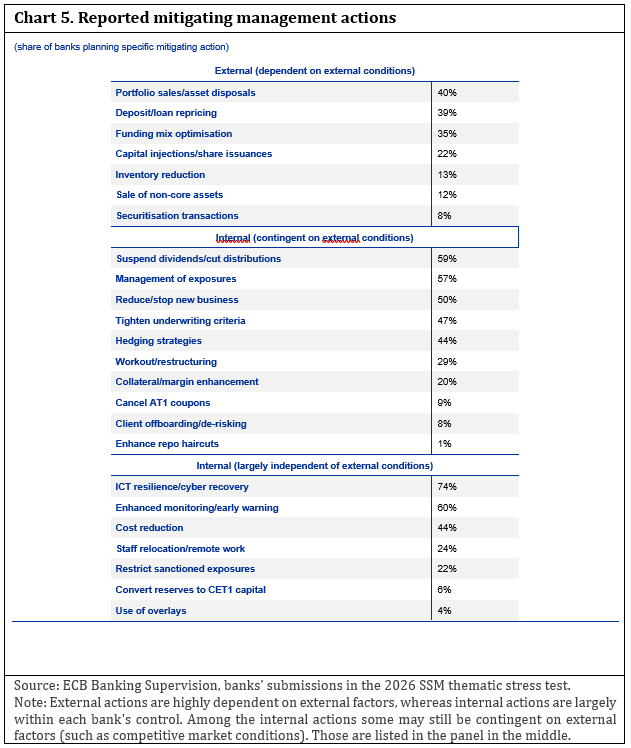
The assumed mitigating management actions are, in general, consistent with those already included in banks’ ICAAPs and recovery plans. A significant fraction of banks (40-60%) indicated that they would take actions whose executability would depend on market conditions. Under systemic stress scenarios, these actions may, however, be less effective than what the individual bank may expect. This would especially be the case for mitigating management actions simultaneously implemented across many banks. Similarly, however to a lesser extent, effectiveness of some of the management actions that are more at banks’ discretion, e.g., suspending dividends or reducing new business, could be impaired as well (Chart 5).
A key question is to what extent planned mitigating management actions are implementable in a systemic crisis where the economy is in a downturn and financial markets are in distress following the materialisation of geopolitical risks. In order to answer this question, we analyse how some of the mitigating management actions most prevalently mentioned by banks have historically evolved during past crisis periods. This may help to understand to what extent such actions would be implementable and effective in a situation of systemic geopolitical distress.
To identify historical crisis periods from the past 15-20 years in the euro area we make use of well-established market-based systemic risk indicators including the Composite Indicator of Systemic Stress (CISS) by Holló et al. (2012), the Joint Probability of Default of two systemic euro area banks developed in ECB (2008), the Marginal Expected Shortfall (MES) by Acharya et al. (2017) and the Delta CoVaR by Adrian and Brunnermeier (2016). These indicators increase when market conditions indicate a perception or realization of higher financial and banking stress. As the signals issued by these indicators are broadly aligned, we base the timing of crisis period on the CISS indicator. Crisis periods are defined as times when the CISS exceeds the threshold of 0.3. The threshold is set to be in the range of the values identified as optimal between crisis and tranquil periods estimated by Holló et al (2012) in a threshold VAR (TVAR).3 Below the threshold the CISS has essentially no explanatory power for output whereas above it industrial production growth collapses sharply in response to shocks captured by CISS, with the maximum impact reached after about four months. The chosen threshold appropriately identifies as crisis periods the global and sovereign debt crisis (end-2007 to end-2012), the outbreak of the COVID-19 pandemic (spring 2020) and later the energy crisis triggered by the Russian invasion of Ukraine (spring 2022 to end-2022).
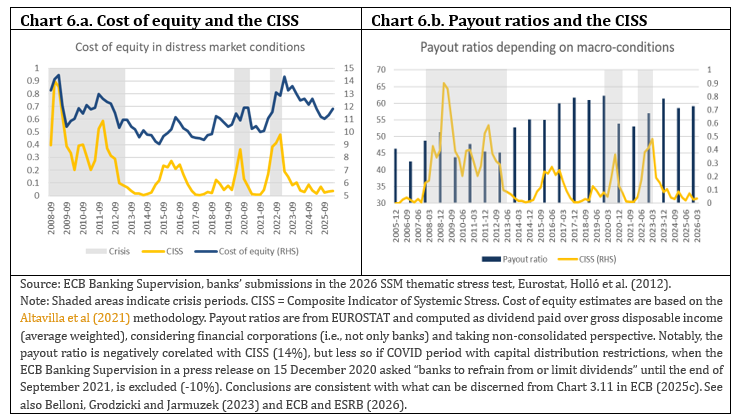
In the following, we analyse how banks have adjusted in these crisis periods, considering equity issuance, dividend distribution, credit standards and others, to assess the plausibility of the proposed external management actions during stress times. Focusing first on banks’ ability to issue equity to restore their capital ratio following a significant crisis-induced drawdown, it can be observed that the cost of capital measured by Altavilla et al (2021) not only correlates positively with the CISS (57%), but tends to increase during crisis periods (Chart 6.a and Table 1), especially during the GFC and the Russian invasion of Ukraine. Moreover, from a linear regression of the cost of capital on the CISS we can infer that an increase of the CISS by 0.3 coincides with an increase of the cost of capital by 0.6 pp.
Weaker fundamentals of banks and of financial markets are also associated with higher cost of capital. Altavilla et al. (2021) find, for example, that higher NPL ratios, interbank deposit ratios and cost-to-income ratios may lead to higher COEs.4 All in all, it suggests that capital becomes more costly exactly when it is needed most by banks to replenish their capital. This stylized fact is important as it indicates that the access to capital markets may not be readily available for banks during a systemic crisis, or the price of capital may become prohibitively high.
The same logic applies to adjustments of dividend distribution policies. Banks might choose to lower the payout ratio by reducing planned dividend payments with the aim of restoring their capital ratio. However, such actions may be constrained by market forces as they may entail unwanted signalling and stigma effects towards investors with negative implications for the bank’s share prices and future cost of funding. In fact, we observe that payout ratios have historically been relatively sticky with only limited reductions during crisis periods, especially visible during the COVID-19 stress in 2020 or the Russian invasion of Ukraine in 2022 (Chart 6.b).5 More formally, using a linear regression of payout ratios6 on CISS, we can see that an increase of the CISS by 0.3 implies only a 3 pp decline in payout ratios.
Another popular set of measures to help restore profitability involves changes of credit standards and related tightening of collateral requirements and margin repricing (Charts 7a-b). Indeed, we observe a tightening of credit standards during crisis periods, driven by capital and liquidity constraints to preserve the credit quality of the portfolio (Chart 7.b). Similarly, terms and conditions also tend to be tightened when crisis hits, especially via margin increases and stricter collateral requirements (Chart 7.a).
However, it can also be observed that periods of tightening credit standards tend to be followed by declining loan growth which, due to lower implied business volumes, would tend to reduce bank profitability, despite their potential mitigating effect on asset quality deterioration. As a result, the effectiveness of such credit tightening measures may be lower than the individual bank may expect as they may lead to a credit crunch, weaker recovery, and higher defaults.
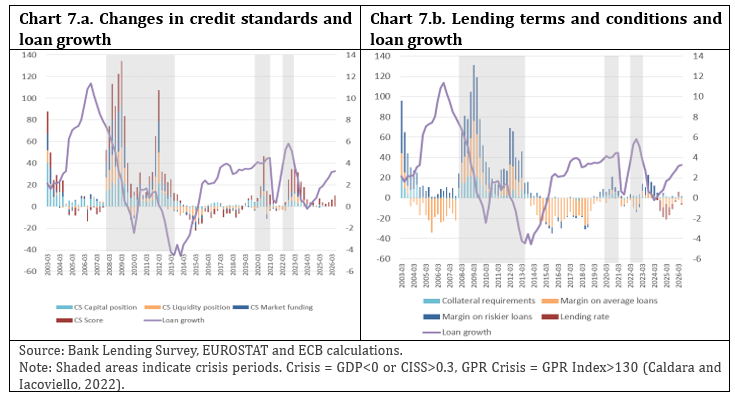
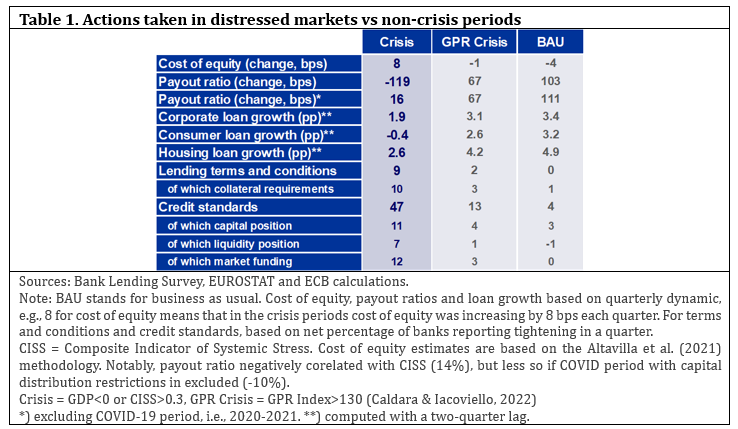
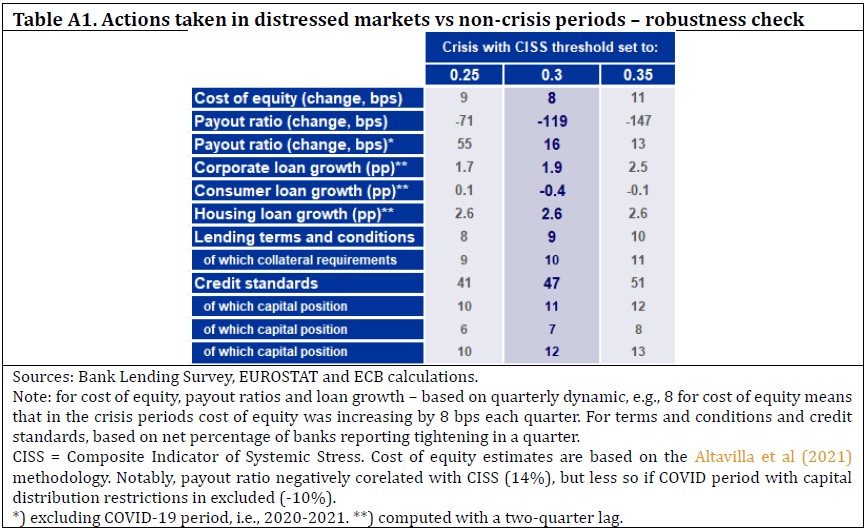
Table 1 summarizes these findings, comparing the average change in respective variables in unstressed business-as-usual (BAU) periods versus historical crisis periods. In this way, it can be verified quantitatively whether dynamics of cost of capital, capital distributions, loan growth, as well as lending terms and conditions and credit standards may create headwinds for banks when managing risks in their balance sheet during crisis periods. Specifically, during crisis periods the cost of equity has, on average, increased by 8 bps each quarter, compared with a quarterly decline of 4 bps in unstressed (BAU) periods. Payout ratios are rather stable in crises, with only a 16 bp quarterly increase (when excluding the COVID-19 period, i.e., a period with imposed restrictions on capital distributions). Loan growth is much weaker in crisis periods, notably with even a decline in the consumer credit segment. Moreover, lending terms and conditions and credit standards tighten more in crises (net 9% and 47% of banks reporting tightening, respectively) than in the BAU periods (net zero and only 4% of banks reporting tightening, respectively). A robustness analysis with respect to the choice of the threshold value of CISS defining the crisis periods is presented in Table A1 in the annex.
Using information collected in the context of the 2026 thematic stress test exercise of the SSM, we discussed the effectiveness of management actions that banks plan to deploy to mitigate the solvency impact of macro-financial stress resulting from geopolitical risks.
Those mitigating management actions are part of banks’ capital and recovery planning and should therefore already be part of a rigorous governance framework, considering banks’ specific business models and economic environment. However, since a bank cannot fully internalize actions of other financial institutions facing a similar stress, studies such as ours underscore the importance of thorough preparation and realistic assumptions in banks’ management action planning.
The exercise revealed the need for prudent preparation with realistic and implementable plans, particularly in the context of heightened geopolitical and macroeconomic uncertainty. Realistic assumptions, especially about actions dependent on market conditions, are pivotal to ensuring banks’ resilience in the face of systemic stress. While banks are increasingly aware of the need to plan for severe geopolitical disruptions, the systemic nature of such stress — where multiple institutions may face simultaneous challenges — requires more robust and grounded planning. Mitigating actions that appear feasible for individual institutions may not be implementable under system-wide strain, as competition for limited resources or liquidity on financial markets can render individual strategies ineffective.
More specifically, banks do not operate in isolation; in a system-wide crisis, multiple market participants may try to abruptly tap from the same capital or funding markets or liquidate assets at the same time. Moreover, cost efficiency of some management actions may be impaired, especially if the implementation of these actions depends on external conditions, e.g., cost of equity issuances in distressed market conditions. This underscores the importance of developing management responses to stress scenarios that account not only for individual bank vulnerabilities but also for broader market dynamics during crisis periods.
In conclusion, the thematic stress test highlights the critical role of preparation with realistic assumptions in enhancing banks’ ability to navigate geopolitical risks under the prevailing market conditions. As geopolitical uncertainty continues to rise, supervisors and banks alike must prioritize the development of actionable, realistic strategies that account for systemic dynamics. By doing so, the financial system will be better equipped to absorb shocks and safeguard stability during future crises, but without adequate preparation, banks risk exacerbating systemic instability rather than mitigating it.
Acharya, V., Pedersen, L., Philippon, T, Richardson and M. (2017), “Measuring Systemic Risk”, The Review of Financial Studies, Vol. 30 (1), pp. 2–47, January.
Adrian, T. and Brunnermeier, M. (2016), “CoVaR”, The American Economic Review, Vol. 106(7), July.
Altavilla, C., Bochmann, P., De Ryck, J., Dumitru, A.-M., Grodzicki, M., Kick, H., Melo Fernandes, C., Mosthaf, J., O’Donnell, C. and Palligkinis, S. (2021), “Measuring the cost of equity of euro area banks”, ECB Occasional Paper Series No 254, January.
Baker, S. R., Bloom, N., Davis, S. J. (2016), “Measuring Economic Policy Uncertainty”, The Quarterly Journal of Economics, Vol. 131(4), pp. 1593–1636, November.
Belloni, M., Grodzicki, M. and Jarmuzek, M. (2023), “Why European banks adjust their dividend payouts?”, Journal of Banking Regulation, Vol. 25(3), pp. 284-304.
Buch, C. (2024), “Global rifts and financial shifts: supervising banks in an era of geopolitical instability”, keynote speech at the eighth ESRB annual conference on “New Frontiers in Macroprudential Policy”, 26 September.
ECB (2008), “Measuring the time-varying risk to banking sector stability”, Financial Stability Review, Box 12, pp. 104-105, European Central Bank, December.
ECB (2025a), “ECB to assess banks’ stress testing capabilities to capture geopolitical risk”, Press release, ECB Banking Supervision, 12 December.
ECB (2025b), “Supervisory priorities 2026-28”, ECB Banking Supervision.
ECB (2025c), “Solvency ratios have been supported by strong earnings, allowing for generous shareholder remuneration“, Financial Stability Review, Chart 3.11, p. 63, European Central Bank, May.
ECB (2026), “Geopolitical risk reverse stress test: 2026 SSM thematic stress test”, ECB Banking Supervision, July.
ECB and ESRB (2026), “Financial stability risks from geopolitical fragmentation”, report by ECB and ESRB workstream on financial stability risks from geoeconomic fragmentation, January.
Garcia-de-Andoain, C. and Kremer, M. (2018), “Beyond Spreads: Measuring Sovereign Market Stress in the Euro Area”, ECB Working Paper Series , No 2185.
Holló, D., Kremer, M. and Lo Duca, M. (2012), “CISS- a composite indicator of systemic stress in the financial system”, Working Paper Series No 1426, European Central Bank, March.
The exercise was initiated before the increase in tensions that led to the hostilities between Iran and the US commencing in February 2026.
A limited number of banks did not report any mitigating management actions to offset the negative impact of the scenario on the CET1 ratio, as such measures were not considered necessary considering the limited impact of the scenario on their capital positions.
The authors indicate that the “optimal specification is found to be a [Threshold VAR] model with the twice-lagged CISS (d = 2) as the threshold variable and an estimated threshold value of 0.3233.” As a robustness check, using the once-lagged CISS instead gives a very similar value: a threshold of 0.2960 and further robustness checks confirm that a reasonable range for the threshold is 0.29–0.32.
Altavilla et al. (2021) find that, while estimated sensitivities vary substantially depending on model specifications, bank cost of capital increases when the CET1 ratio decreases and the NPL ratio increases.
For analysis based on pre-pandemic data, see Belloni, Grodzicki and Jarmuzek (2023). The exception to the stickiness of deposit payouts is the 2020-2021 period during the Covid-19 pandemic where the ECB recommended all banks not to pay out dividends with the objective to boost banks’ capacity to absorb losses and support lending. This recommendation helped overcome the stigma effect associated with individual bank reductions of their dividend policies.
We exclude COVID-19 period (2020-2021) given the active policy intervention enforcing cutting payout ratios.