

This policy brief is based on Bank of Greece Working Paper No. 362. The views expressed in this column are the responsibility of the authors and do not necessarily reflect the position of the Bank of Greece.
Abstract
This study examines the impact of monetary policy and its announcements on firms’ loan application discouragement, operating through changes in credit standards. We merge firm-level data from the Survey on the Access to Finance of Enterprises (SAFE) with bank-level data from the Bank Lending Survey (BLS) for twenty-euro area countries, covering the period from the first half of 2009 to the second half of 2024. The findings indicate that, following a monetary policy–induced tightening of credit standards, firms with higher turnover, stronger credit records and more stable balance sheets exhibit a lower propensity to become discouraged from applying for loans. Conversely, firms with weaker characteristics are more adversely affected. Importantly, these effects persist even when the analysis is restricted to firms with a very low probability of loan rejection, indicating that monetary policy induces a self-restriction mechanism that operates in addition to the traditional credit supply channel.
The influence of central bank policies on firms has been extensively documented, with significant emphasis placed on the channels through which monetary shocks transmit to the microeconomic environment. Existing literature examines this transmission from the dual perspectives of borrowers and lenders, analyzing their behavioral responses to shifting monetary conditions. On the supply side, studies highlight how fluctuations in policy rates and credit availability shape the lending behavior of financial institutions. Conversely, on the demand side, research explores corporate adjustments to monetary dynamics, including shifts in money demand driven by interest rate hikes or balance sheet effects from altered financing costs. Notably, monetary policy interventions can also induce self-rationing among certain firms, uncovering a distinct ‘side effect’ within the broader transmission mechanism.
A substantial body of research investigates how monetary policy shapes firms’ financing conditions and performance through various transmission channels. Mishkin (1995) underscores the interest rate channel, where policy rate adjustments directly alter the cost of capital and investment attractiveness. Bernanke et al. (1995) emphasize the credit channel, demonstrating that credit contractions tighten financing conditions, thereby constraining corporate investment and profitability. Furthermore, monetary policy influences investment behavior by altering equity valuations via the asset price channel (Chirinko, 1987) and restricts access to external finance by heightening banks’ risk aversion through the risk-taking channel (Borio and Zhu, 2012).
In addition, the inflation channel captures how monetary policy influences firms through changes in inflation expectations and real balances; a contractionary stance that lowers expectations can raise real interest rates, discouraging borrowing and investment (Taylor, 1995; Nelson, 2002; Woodford, 2003). Finally, the exchange rate channel impacts firms via currency movements. Α tightening of policy typically triggers currency appreciation, which undermines export competitiveness while lowering the costs of imported inputs (Obstfeld and Rogoff, 1995; Taylor, 1995).
This study investigates how contractionary monetary policy shocks transmit through bank credit standards to induce loan application discouragement among firms. Following a policy tightening, banks restrict lending conditions, increasing firms’ perceived probability of rejection and leading them to refrain from applying for credit, with the magnitude of this effect varying systematically across firm turnover and debt structure. To empirically identify this mechanism, we combine firm-level data from the Survey on the Access to Finance of Enterprises (SAFE), a biannual survey conducted jointly by the ECB and the European Commission covering thousands of euro area firms, with bank lending conditions data from the Bank Lending Survey (BLS), which reports credit standards on a quarterly basis. Since the SAFE is conducted on a semi-annual basis, BLS credit standards are aggregated to the same six-month frequency using period averages, ensuring temporal alignment between the two data sources[1]. While the baseline results remain robust even for firms with a very low ex ante probability of rejection, this mechanism aligns with recent evidence by Anastasiou et al. (2023), who document that ECB communications, such as policy speeches, can significantly influence the degree of corporate loan discouragement.
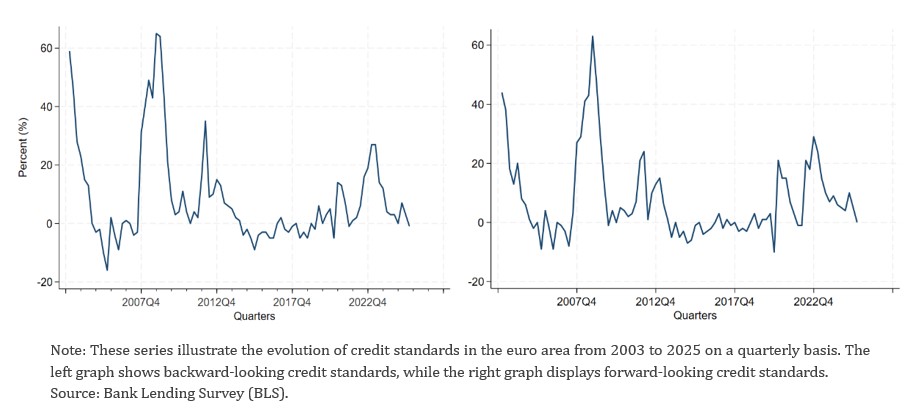
In order to measure the indirect impact of monetary policy through credit standards on firms’ discouragement, we employ a two-stage empirical framework. In the first stage, we estimate the response of both backward- and forward-looking credit standards to monetary policy innovations using three alternative instruments: Taylor rule residuals following Romer and Romer (2004), three-month OIS swap yields following Altavilla et al. (2019), and monetary policy speech tone following Anastasiou et al. (2023). To provide a broader characterization of the dynamic relationship between monetary policy and credit standards, we also report Impulse Response Functions (IRFs) estimated at quarterly frequency, exploiting the fuller time-series dimension of the BLS and monetary policy data with six lags. For the two-stage analysis, however, both data sources are aggregated to a semi-annual frequency to align with the SAFE survey cycle. Consequently, the first-stage regressions are estimated with two lags of the monetary policy instruments — preserving an economically meaningful transmission horizon while respecting the reduced time-series variation at the six-month frequency. The fitted values from the first stage, capturing the exogenous component of credit standard changes driven by monetary policy, are then introduced into the second stage with one lag, where a Probit model estimates the probability of loan application discouragement at the firm level. Credit standards are calculated as a net percentage defined as the difference between the percentage of banks reporting a tightening and those reporting an easing of lending conditions. Positive values indicate a net tightening of credit requirements, such as collateral, maturities, and leverage constraints, for small and medium-sized enterprises (SMEs) (see Figure 1).
Figure 1. Credit Standards in Eurozone
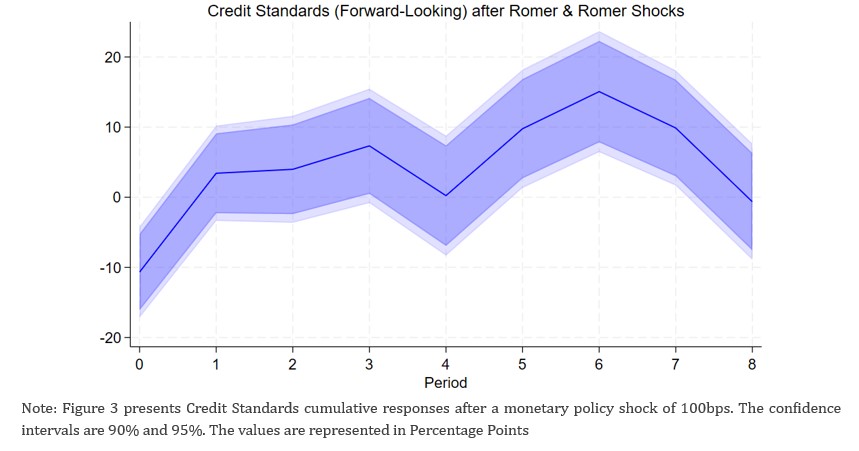
Using the local projection framework, the results indicate that monetary policy exerts a significant and persistent influence on the future evolution of credit standards. Specifically, in response to a 100-basis-point Romer and Romer (R&R) monetary policy shock, backward-looking credit standards rise cumulatively by approximately 5% six to seven quarters ahead (see Figure 2). Similarly, forward-looking credit standards increase by nearly 10% five to six quarters after the shock (see Figure 3).
Figure 2. Local Projections of Credit Standards (Backward-looking) after a 100 bps R&R Shock
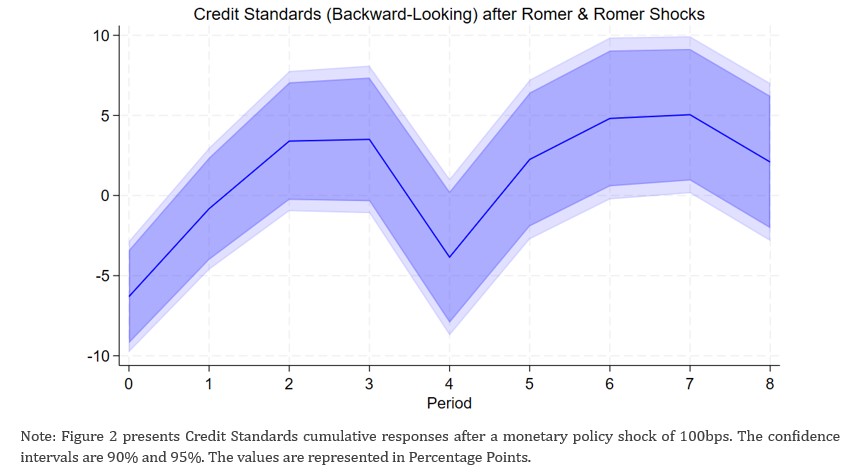
Figure 3. Local Projections of Credit Standards (Forward-looking) after a 100 bps R&R Shock
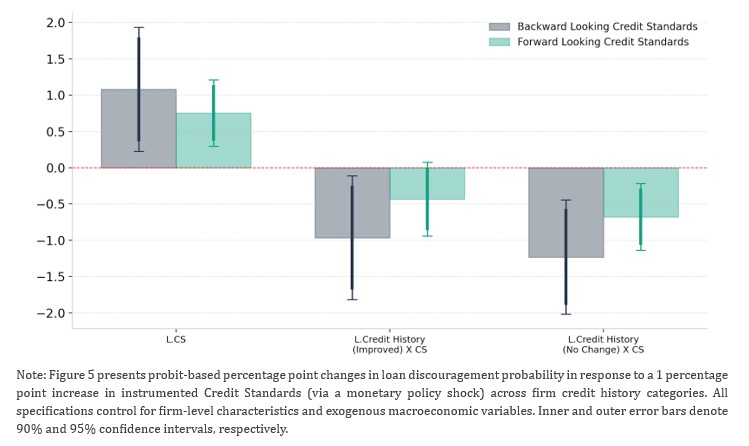
A 1% increase in forward-looking credit standards driven by monetary policy tightening raises the probability of a firm becoming a discouraged borrower by 0.26 percentage points, on average2. When accounting for firm-level heterogeneity, we find that this policy-driven tightening of credit standards disproportionately affects firms characterized by lower turnover, a deteriorating credit history, and an unstable debt-to-asset ratio (see Figure 4 and 5).
Figure 4. The impact of Credit Standards instrumented with Monetary Policy Shock (Romer & Romer)-Across Firms’ Turnover
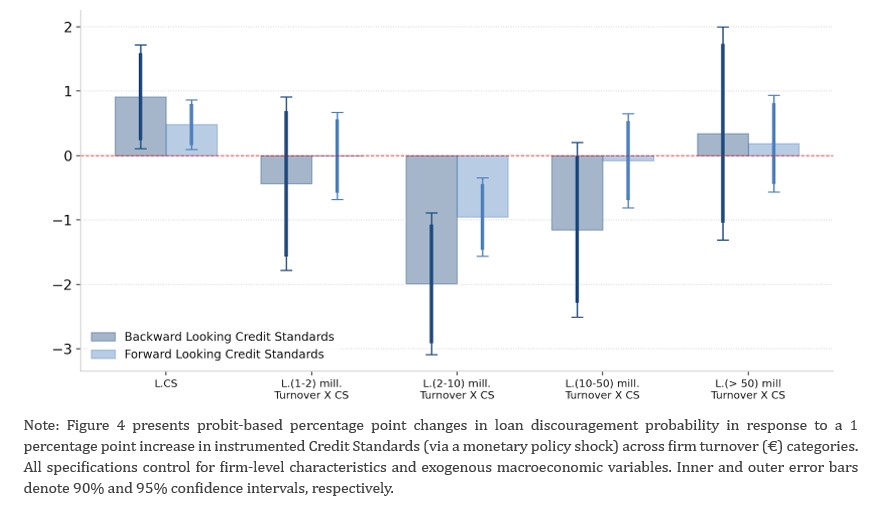
Figure 5. The impact of Credit Standards instrumented with Monetary Policy Shock (Romer & Romer)-Across Credit History
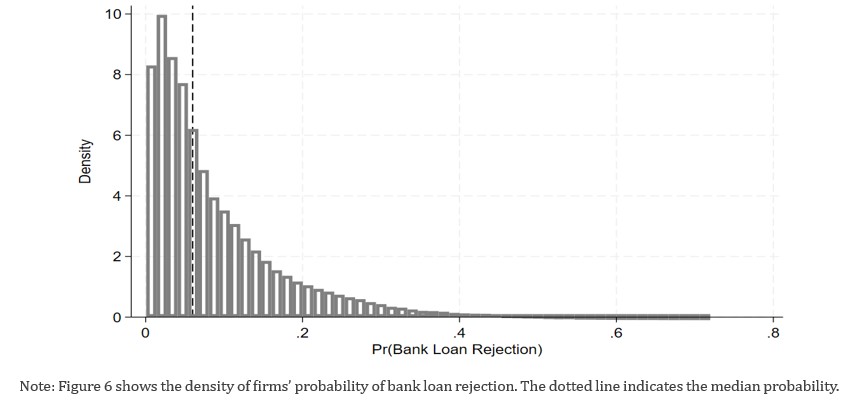
The results remain robust for low-risk firms, which we identify by splitting the sample into risky and non-risky categories based on their ex-ante probability of loan rejection. To estimate this probability, we employ a probit model using a dummy variable from the SAFE survey that indicates whether a firm applied for a loan in the past six months and whether it was rejected. The model controls for a comprehensive set of firm characteristics and macroeconomic factors (e.g., the economic outlook). Consequently, each firm is assigned an individual estimated rejection probability. We then establish a sample median threshold of 5.99%, defining firms below this benchmark as low-risk and excluding those above it (Figure 6).
Figure 6. Density of firms’ probability of bank loan rejection
When restricting the analysis to this low-risk subsample, the results follow the exact same pattern as our baseline findings and maintain the previously documented heterogeneity across firm turnover and debt-to-asset ratios. Notably, the estimated coefficients for these low-risk firms, as well as the associated interaction effects, exhibit even higher levels of significance than those in the full-sample baseline model.
This study investigates the transmission of ECB monetary policy to firm-level borrowing behavior through bank credit standards, focusing on loan application discouragement. By merging micro-data from the SAFE and BLS surveys with alternative monetary policy shocks, we show that monetary tightening strongly transmits through bank credit standards to induce corporate self-rationing, aligning with de Haan and Sterken (2006) and Ciccarelli et al. (2015). Crucially, while contractionary shocks disproportionately affect smaller and riskier counterparts, our core findings remain robust and exhibit even higher significance when restricting the sample to low-risk firms with a high ex-ante probability of loan approval. By isolating these unconstrained borrowers, our analysis uncovers a novel behavioral and self-restriction channel driven by altered perceptions and expectations, which operates independently from the traditional credit supply channel. From a policy perspective, these findings underscore that monetary tightening does not merely restrict aggregate credit supply but introduces informational and psychological barriers that can inadvertently deepen financing inequalities across the corporate sector, necessitating targeted credit guarantees and clearer central bank communication strategies.
Altavilla, C., Brugnolini, L., Gürkaynak, R. S., Motto, R., & Ragusa, G. (2019). Measuring euro area monetary policy. Journal of Monetary Economics, 108, 162-179.
Anastasiou, D., Krokida, S. I., Tsouknidis, D., & Drakos, K. (2023). Can the tone of central bankers’ speeches discourage potential bank borrowers in the Eurozone? Journal of International Money and Finance, 139, 102950.
Bernanke, B. S., & Gertler, M. (1995). Inside the black box: the credit channel of monetary policy transmission. Journal of Economic perspectives, 9(4), 27-48.
Borio, C., & Zhu, H. (2012). Capital regulation, risk-taking and monetary policy: a missing link in the transmission mechanism?. Journal of Financial stability, 8(4), 236-251.
Ciccarelli, M., Maddaloni, A., & Peydró, J. L. (2015). Trusting the bankers: A new look at the credit channel of monetary policy. Review of Economic Dynamics, 18(4), 979-1002.
Chirinko, R. S. (1987). Tobin’s q and financial policy. Journal of Monetary Economics, 19(1), 69-87.
De Haan, L., & Sterken, E. (2006). The impact of monetary policy on the financing behaviour of firms in the Euro area and the UK. European Journal of Finance, 12(5), 401-420.
Kara, A., & Nelson, E. (2003). The exchange rate and inflation in the UK. Scottish Journal of Political Economy, 50(5), 585-608.
Mermelas, G., & Tagkalakis, A. (2026). The transmission of monetary policy through credit standards: evidence on loan application discouragement in the euro area. Bank of Greece Working Paper No. 362.
Mishkin, F. S. (1995). Symposium on the monetary transmission mechanism. Journal of Economic perspectives, 9(4), 3-10.
Obstfeld, M., & Rogoff, K. (1995). Exchange rate dynamics redux. Journal of political economy, 103(3), 624-660.
Romer, C. D., & Romer, D. H. (2004). A new measure of monetary shocks: Derivation and implications. American economic review, 94(4), 1055-1084.
Taylor, J. B. (1995). The monetary transmission mechanism: an empirical framework. Journal of economic perspectives, 9(4), 11-26.
Woodford, M. (2003). Imperfect common knowledge and the effects of monetary policy. Knowledge, information, and expectations in modern macroeconomics: In honor of Edmund S. Phelps, 25(1), 4.
See Mermelas and Tagkalakis (2026) for a detailed description of the complete dataset and variables.
See Mermelas and Tagkalakis (2026) for the full set of results.